
5 AWS Mistakes Maryland Businesses Make (And How to Avoid Them)
You finally made the move to AWS. The server is gone, the bills look manageable, and everything seems fine — until your cloud costs spike without warning, a misconfigured bucket exposes client data, or your app goes down on a Friday afternoon.
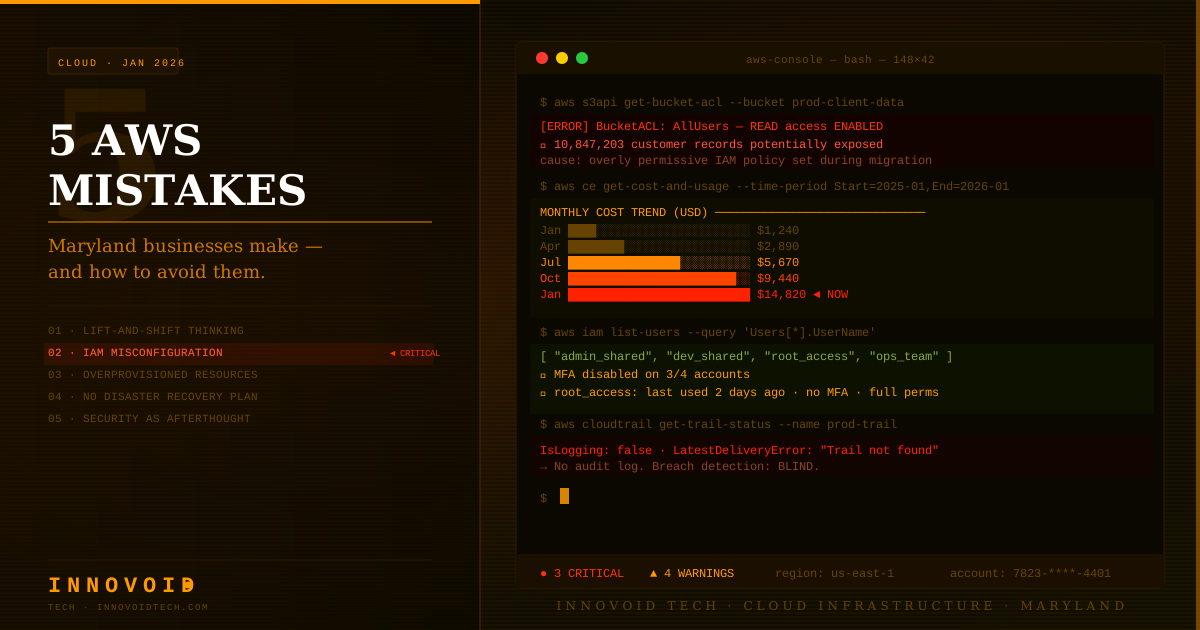
These aren't edge cases. They're the most common outcomes when businesses move to AWS without a clear infrastructure strategy. Here's what we see most often — and what to do instead.
Mistake 1: Treating AWS Like a Cheaper Server
Moving your old setup to the cloud without changing anything is called "lift-and-shift." It's fast, but it's expensive. You're paying cloud prices for on-premise thinking.
The fix: Redesign workloads for the cloud. Use managed services (RDS, Lambda, ECS) instead of running everything on EC2. You'll cut costs and reduce maintenance overhead.
Mistake 2: Ignoring IAM Until Something Goes Wrong
Identity and Access Management (IAM) is where most small business AWS accounts fall apart. Broad permissions, shared credentials, and root account usage are a hacker's dream.
In early 2025, a misconfigured S3 bucket exposed 10 million customer records at a mid-sized e-commerce company. The cause? Overly permissive IAM policies left in place since setup.
The fix: Apply least-privilege access from day one. No shared credentials. MFA on every account. Audit permissions quarterly.
Mistake 3: Overprovisioning Resources
It's tempting to size up "just in case." But Gartner projects that through 2027, 60% of organizations will face major cloud cost overruns due to overprovisioned, idle, or unmanaged resources.
The fix: Right-size your instances. Use AWS Cost Explorer and set billing alerts. Consider Reserved Instances for predictable workloads.
Mistake 4: No Backup or Disaster Recovery Plan
Assuming AWS keeps your data safe without a recovery plan is a dangerous bet. AWS provides infrastructure reliability — not automatic data recovery.
The fix: Set up automated snapshots, cross-region backups, and test your recovery process at least quarterly. Know your RTO and RPO before you need them.
Mistake 5: Security as an Afterthought
Misconfigured security groups, open ports, and missing encryption are consistently among the top causes of cloud breaches. Security bolted on after launch is security that doesn't hold.
The fix: Enable AWS CloudTrail, GuardDuty, and Security Hub from the start. Encrypt data at rest and in transit. Treat security as infrastructure, not a checkbox.
Moving to AWS is a smart decision. Moving without a plan is where it gets costly.
If you're a Maryland business navigating AWS for the first time — or cleaning up a setup that got away from you — we can help you build it right. Talk to us.