
How Automation Saved a Local Firm 10 Hours a Week
Ten hours. That's what one Maryland-based services firm got back every single week after we helped them automate three workflows they'd been doing manually for years.
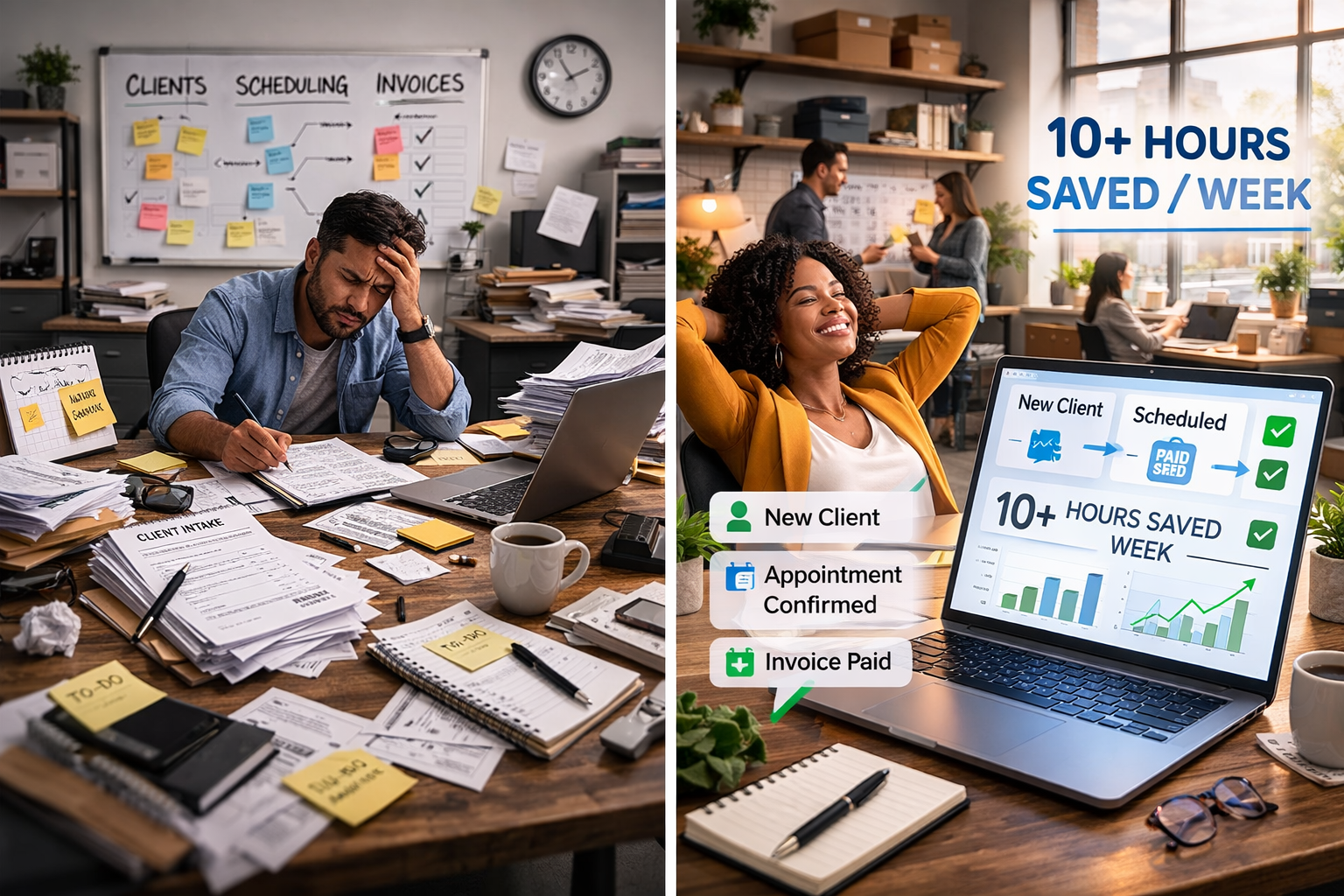
This isn't a case study about a tech company. It's about a small, owner-operated business that was drowning in repetitive admin work — and what happened when we fixed the infrastructure underneath it.
The Problem
The firm was spending significant time every week on three things:
- Client intake — manually copying form submissions into their CRM
- Scheduling — back-and-forth emails to confirm appointments
- Invoicing — generating and sending invoices by hand after each completed job
None of it required human judgment. All of it was eating hours that should have gone toward client work and business development.
What We Built
We didn't recommend a stack of new software. We connected the tools they already had and added targeted automation where it mattered most.
Intake automation
A structured intake form now feeds directly into their CRM. No copy-paste. No missed fields. New client records are created automatically, with follow-up tasks assigned to the right team member.
Scheduling
An automated scheduling link replaced the email chain. Clients book directly, confirmations go out automatically, and reminders fire 24 hours before each appointment.
Invoicing
Completed jobs trigger an automated invoice workflow. The invoice generates, populates with the right line items, and sends — without anyone touching it.
The Results
- 10+ hours saved per week — consistent with industry benchmarks showing 8–15 hours weekly recovered through targeted workflow automation
- Fewer errors — no more missed invoices or duplicate CRM entries
- Faster client response times — intake to first contact dropped from 24+ hours to under 2
- Owner focus shifted — from admin to business development
What This Means for Your Business
Automation doesn't require a big budget or a technical team. It requires knowing which workflows are costing you the most time and building the right connections between your existing tools.
For most small service businesses, the highest-ROI automations are the ones closest to the client: intake, scheduling, follow-up, and invoicing.
If you're spending more than 5 hours a week on tasks that follow the same pattern every time, that's time you're paying for twice.
We help Maryland service businesses identify exactly where automation makes sense — and build it cleanly, without overcomplicating it. Let's talk.