Implementing AI Chatbots for Customer Service
How to implement intelligent chatbots that improve customer satisfaction while reducing support costs.
Why AI Chatbots Are Now a Business Imperative
By mid-2025, AI chatbots have shifted from being a futuristic experiment to a core pillar of customer service operations. According to Zendesk's 2025 Customer Experience Trends report, over 70% of service organizations now use AI to handle frontline inquiries, with small and mid-sized businesses leading adoption thanks to lower entry costs and cloud-native tools.
The shift is clear: customers expect instant, personalized responses, while businesses need to scale support without inflating headcount. Done right, chatbots can deflect routine tickets, free agents for higher-value work, and deliver measurable ROI within months.
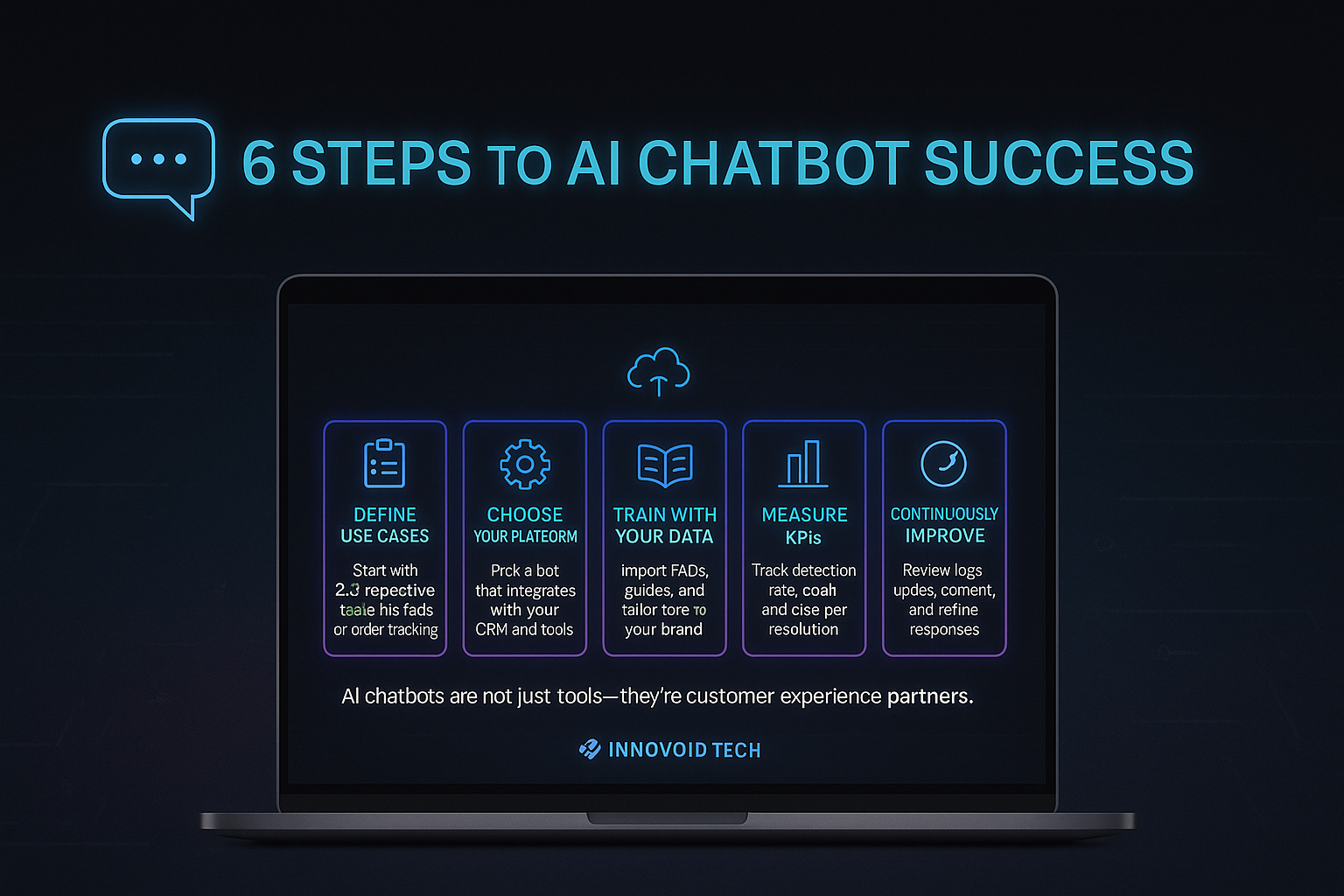
Step 1: Define the Right Use Cases
Not every support scenario should be handled by a bot. The best starting points are high-volume, repetitive interactions that drain agent time. Examples include:
- Password resets and account unlocks
- Order status lookups and delivery tracking
- FAQs about pricing, returns, or policies
- Appointment scheduling and rescheduling
- Troubleshooting guides for common issues
Pro Tip:
Start with 2–3 narrow use cases, measure impact, and expand.
Step 2: Choose the Right Platform
By June 2025, the chatbot landscape has matured. Many CRMs, help desks, and e-commerce platforms now offer AI-native chatbot modules. Leading options include:
- Zendesk AI – tightly integrated with ticketing.
- Intercom Fin AI – excels at proactive messaging.
- HubSpot Service Hub AI – designed for SMBs with built-in sales + service workflows.
- Custom GPT-powered bots – for organizations needing highly tailored experiences.
Key considerations when selecting a platform:
- Integration depth with your existing systems (CRM, knowledge base, ERP).
- Ease of training with your data and tone of voice.
- Analytics and reporting to measure ROI and customer impact.
Step 3: Train with Your Knowledge, Not Just Generic AI
The difference between a chatbot customers love and one they abandon is contextual accuracy.
- Import your existing knowledge base, FAQs, and product guides.
- Fine-tune responses to reflect your brand's tone—friendly, professional, or consultative.
- Use AI prompt patterns to control response style, escalation triggers, and compliance rules.
Think of it as onboarding a new employee: your chatbot needs the right training and guardrails to succeed.
Step 4: Keep Humans in the Loop
Even the best bots need backup. Customers lose trust when they feel trapped in an endless loop.
- Escalation logic: After 2 failed attempts, route to a human.
- Seamless handoff: Pass the chat transcript so agents do not ask customers to repeat themselves.
- Hybrid workflows: Use bots for triage—collect context, categorize the issue, and prep the human agent.
Result: Faster resolutions, happier customers, and reduced agent burnout.
Step 5: Measure What Matters
AI chatbots succeed when they deliver measurable value. Track these KPIs:
- Deflection Rate – % of tickets resolved without human intervention.
- First Response Time (FRT) – how quickly the bot acknowledges a query.
- Customer Satisfaction (CSAT/NPS) – customer sentiment post-interaction.
- Cost per Resolution – total support costs divided by tickets resolved.
Freshworks' 2025 benchmarks show a median chatbot deflection rate of 57%, translating into significant savings.
Step 6: Continuously Improve
Chatbots are not "set and forget." To stay effective:
- Review chat logs weekly for gaps.
- Update responses with new promotions, product releases, or policy changes.
- Use AI analytics to identify trends: Which issues are spiking? Where do bots fail most often?
A chatbot should evolve alongside your business.
The Forward View
In June 2025, AI chatbots are no longer a cost-saving experiment—they are a strategic customer experience investment. Businesses that implement them well are not just reducing expenses; they are creating faster, smarter, and more satisfying interactions that strengthen brand loyalty.
At Innovoid Tech, we believe the most successful businesses of the next decade will treat AI not as a tool, but as a partner in growth—and intelligent chatbots are where that partnership begins.
Ready to Transform Your Customer Service with AI?
Let our experts help you implement AI chatbots that deliver real results for your business.
Get Started Today